
Contents
Water Damage Cleanup is essential for protecting your office and minimizing the impact of unexpected water-related issues. It’s vital to act quickly when faced with such an issue in your workplace. Immediate steps can prevent further damage, reduce costs, and limit long-term disruptions. Understanding how to identify water damage sources, apply effective removal techniques, and follow best practices for restoration can make all the difference. Let’s explore these essential tips to safeguard your workspace.
Key Takeaways
- Prioritize immediate water extraction using a wet/dry vacuum to minimize damage and costs.
- Conduct a thorough moisture assessment to identify sources and extent of water damage.
- Ensure proper ventilation by opening windows and using fans to prevent mold growth.
- Utilize moisture meters to monitor levels and assess the effectiveness of cleanup efforts.
- Implement preventive measures, such as regular maintenance checks, to avoid future incidents.
How to Identify Water Damage Sources?
How can you pinpoint the sources of water damage in your office? Start by conducting a thorough moisture assessment. Check areas around windows, pipes, and ceilings for any signs of dampness or discoloration.
Use leak detection tools, like moisture meters, to measure levels in walls and floors, ensuring you catch hidden leaks early. Don’t forget to inspect appliances, such as refrigerators and dishwashers, as these can be common culprits.
Pay attention to the smell; musty odors often indicate lingering moisture. By methodically examining these areas, you’ll identify potential sources of water damage before they escalate.
Immediate Steps for Effective Water Removal
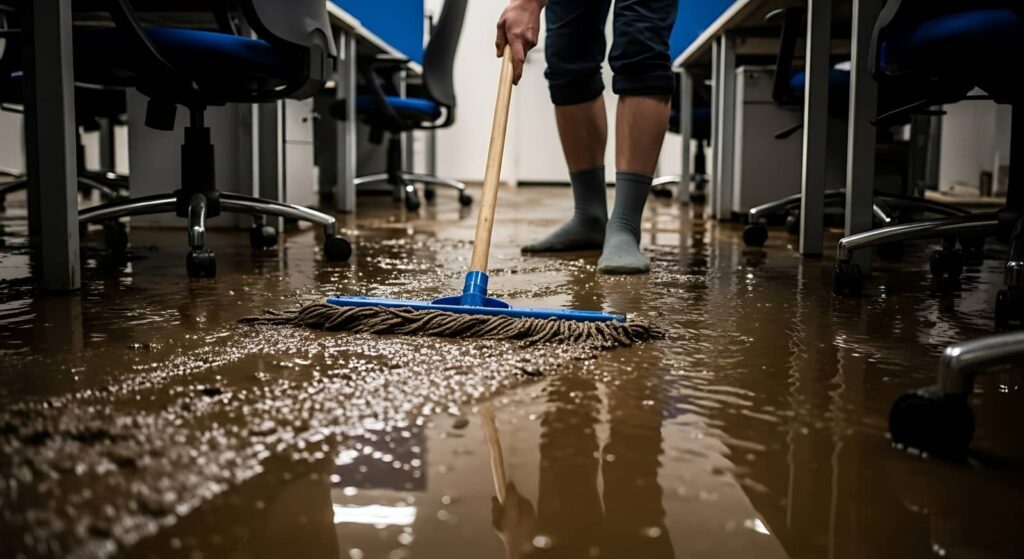
As soon as you notice water damage, taking immediate action is vital to minimize further issues. Start by prioritizing water extraction; use a wet/dry vacuum or a pump to remove standing water quickly. The sooner you act, the less damage you’ll face.
Next, focus on moisture monitoring to assess the extent of the problem. Use a moisture meter to identify damp areas that may not be visible. This step is essential for preventing mold growth and structural damage.
After extracting the water, ensure proper ventilation by opening windows and using fans. Remember, thoroughness in these immediate steps lays the foundation for effective long-term recovery. Your prompt response can notably reduce restoration costs and downtime.
Best Practices for Restoring and Preventing Water Damage
Restoration and prevention of water damage require a strategic approach to secure long-term protection for your office space.
Start with a thorough water damage assessment to identify the source and extent of the problem. This enables you to address issues effectively.
Implement moisture control measures, like dehumidifiers and proper ventilation, to prevent future incidents. Regularly inspect plumbing and roofing for potential leaks, and maintain your gutters to secure proper drainage.
Encourage your team to report any signs of moisture promptly. Finally, consider investing in water-resistant materials for vulnerable areas.
These best practices safeguard your office and foster a sense of community responsibility among employees, ensuring everyone feels invested in maintaining a safe workspace.
Frequently Asked Questions
How Long Does It Take for Water Damage to Show Visible Signs?
Water damage can show visible signs within 24 to 48 hours, depending on the materials affected. Regular signs assessment helps you identify issues early, allowing for a quicker response in managing the water damage timeline effectively.
Can I Handle Water Damage Cleanup Without Professional Help?
You can handle water damage cleanup with DIY methods, but make sure you’ve got proper tools for effective water extraction. Always prioritize safety and be prepared for the possibility that professional help might be necessary.
What Items Are Salvageable After Water Damage Occurs?
After water damage, you can salvage items like metal and plastic furniture, but wood may need restoration. Conduct an electronics assessment to determine if your devices are repairable, ensuring your workspace feels whole again.
How Can I Prevent Mold Growth After Water Damage?
To prevent mold growth after water damage, you need to implement mold prevention strategies, such as using dehumidifiers and ensuring proper ventilation. Regularly check humidity levels and maintain them below 60% to inhibit mold development.
What Insurance Coverage Is Available for Water Damage Claims?
Think of insurance policies like a safety net; they catch you when water damage strikes. Most homeowners and renters insurance cover water damage from leaks, while flood insurance may be necessary for broader protection.
Recap
In conclusion, addressing office water damage quickly and effectively can save you significant time and money. By following the key tips outlined—identifying sources, removing water promptly, and implementing best practices—you can drastically reduce the risk of mold and structural issues. Stay proactive to protect your office environment and ensure a swift recovery from water damage incidents.
Recent Posts
Emergency Water Damage Cleanup: What Happens When Help Arrives?
When you call for emergency water damage cleanup, the first crew on site checks the
Understanding the Water Damage Restoration Process From Start to Finish
You might not realize how much damage hidden moisture can do until it starts affecting
Water Damage Restoration: The Complete Guide to Protecting Your Property
When water damage hits, you need to act fast to limit structural loss, mold growth,