
Contents
When faced with emergency water damage, your first priority is to ensure safety. You need to assess potential hazards and identify the source of the water. Wearing protective gear is vital as you inspect the area. Documenting the damage is essential for your insurance claims. Once you’ve established safety and recorded the impact, you can move on to effective cleaning techniques. But what comes next in restoring your property?
Key Takeaways
- Assess the source of water damage to determine its type and extent, prioritizing safety risks and potential health concerns.
- Document the damage with clear photographs and an inventory of affected items for insurance claims.
- Use appropriate cleaning solutions and techniques to address mold and moisture, ensuring thorough drying and structural integrity.
- Implement preventive measures, such as regular inspections and waterproofing, to avoid future water damage issues.
- Create an emergency plan, including contact information for restoration services, to respond quickly to future incidents.
Assessing Safety Risks Before Water Damage
Before you address any water damage, it’s essential to assess the safety risks involved, as failing to do so could lead to serious hazards.
Start with water source identification; determining whether the water is clean, gray, or contaminated is vital. This helps you understand the potential risks to your health and property.
Next, conduct a thorough risk assessment by evaluating structural damage, electrical hazards, and potential mold growth. If you notice any signs of instability or electrical issues, prioritize your safety by avoiding those areas.
By being methodical in your approach, you protect yourself and create a sense of community responsibility.
Prioritizing Safety and Health Concerns
When dealing with water damage, identifying hazards immediately is vital for your safety.
You’ll need to wear protective gear to shield yourself from potential contaminants and ensure you’re also evaluating the air quality in the affected area.
Prioritizing these health concerns will help you navigate the restoration process more safely and effectively.
Identify Hazards Immediately
Identifying hazards immediately is essential in any emergency water damage situation, as neglecting potential risks can exacerbate health concerns for you and others.
Start with hazard identification by evaluating the environment for electrical hazards, mold growth, or contaminated water. These risks can pose serious health threats, so it’s vital to take a structured approach.
Conduct a thorough risk evaluation to determine the severity of each hazard and prioritize them based on potential impacts. Look for signs of structural damage, slippery surfaces, or hazardous materials that could affect safety.
Use Protective Gear
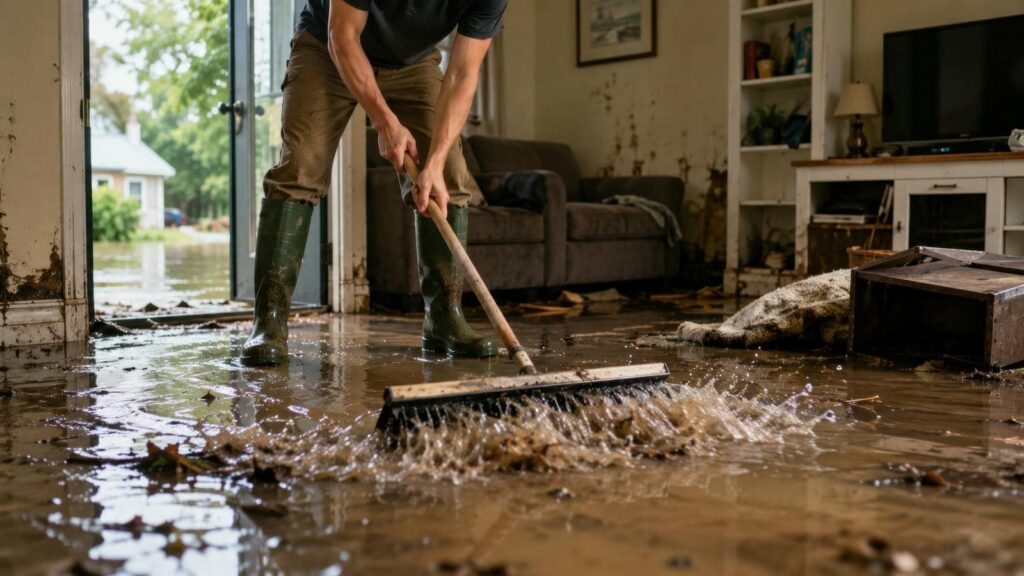
As you tackle water damage restoration, wearing protective gear is essential to safeguard your health and well-being.
Start with sturdy protective clothing, such as waterproof coveralls, to shield yourself from contaminants and moisture. Don’t forget to wear gloves—preferably rubber or latex—to prevent skin contact with harmful substances.
Safety equipment, like goggles and masks, is vital as well; they protect your eyes and respiratory system from debris and mold spores. Ensuring you have sturdy boots with good traction will keep you stable on wet surfaces.
By equipping yourself with the right protective gear, you prioritize your safety and set a standard for others working alongside you.
Assess Air Quality
Before diving into the restoration process, it’s crucial to assess the air quality in the affected area, since poor air quality can pose significant health risks.
Start by checking for signs of mold or mildew, as these can thrive in damp conditions. Implement air filtration systems to remove contaminants and allergens from the environment.
Additionally, monitor humidity levels closely; high humidity can exacerbate mold growth. Use dehumidifiers to maintain ideal levels, ideally between 30-60%.
This proactive approach protects your health and creates a safer environment for everyone involved. By prioritizing air quality, you ensure that your restoration efforts are effective and that you foster a sense of safety and belonging for everyone in the space.
How to Document Water Damage for Your Insurance?
When documenting water damage for your insurance claim, start by taking clear photographs of the affected areas and items.
Next, make a detailed list of all damaged belongings, including their value and condition.
Finally, record the source of the water intrusion, as this information will be essential for your insurer.
Take Clear Photographs
Taking clear photographs is essential for documenting water damage when filing an insurance claim. Start by using a high-resolution camera or smartphone to capture detailed images of the affected areas.
Focus on both wide-angle shots that show the overall damage and close-ups that highlight specific issues, like mold or structural damage. Make sure to include timestamps on your photos, as this serves as important photographic evidence.
Utilize proper documentation techniques by photographing items that are damaged and any standing water. Don’t forget to capture any visible water sources, like leaks or broken fixtures.
This thorough documentation will strengthen your claim, ensuring you have the necessary evidence to support your case with your insurance provider.
Document Damaged Items
After capturing clear photographs of the water damage, it’s crucial to document the items affected by the incident.
Start by creating an inventory checklist of all damaged belongings, noting their condition and any identifying details. This thorough record will aid in item valuation for your insurance claim. Include descriptions, purchase dates, and original costs whenever possible.
If the items are replaceable, research current prices to provide an accurate valuation. Organize this information systematically, as it will streamline the claims process and ensure that you receive fair compensation.
Finally, keep copies of all documentation, including photographs and the inventory checklist, in a secure location to facilitate communication with your insurer.
Record Water Source
To effectively document water damage for your insurance claim, it’s essential to accurately record the source of the water intrusion.
Start with water source identification; determine whether it’s from a clean, grey, or black water source. Take detailed notes on the origin, such as burst pipes, flooding, or appliance malfunctions. Snap clear photos of the affected areas, ensuring the water source is visible.
Note any circumstances surrounding the incident, including dates and times. Classifying the water source helps your insurance provider assess the severity and necessary remediation steps.
Collect any relevant repair bills or estimates, as these will further support your claim. Being thorough now will streamline your process and foster a sense of community in addressing the aftermath.
Effective Cleaning Techniques for Water-Damaged Areas
When dealing with water-damaged areas, it’s vital to act quickly and implement effective cleaning techniques to prevent further deterioration.
Start by using appropriate cleaning solutions that target mold and mildew, which can develop rapidly in damp environments. Apply these solutions to affected surfaces, ensuring you follow the manufacturer’s instructions for safety and effectiveness.
Next, utilize drying techniques such as dehumidifiers and fans to remove excess moisture from the air. This step is important in halting the damage process.
Pay special attention to hidden areas, like behind walls and under carpets, where moisture can linger. Regularly check for any signs of mold growth, and repeat the cleaning and drying process as necessary to maintain a safe, healthy environment for you and your loved ones.
How to Restore and Repair Damaged Structures
As you commence on restoring and repairing structures damaged by water, it’s essential to assess the extent of the damage thoroughly.
This assessment will guide your next steps, ensuring a methodical approach. Here are three key actions to take:
Implement Structural Drying Methods: Use fans, dehumidifiers, and heat to remove moisture from walls and floors effectively.
Apply Mold Remediation Techniques: Identify and treat any mold growth promptly, using approved solutions to prevent health risks.
Evaluate Structural Integrity: Inspect beams, floors, and foundations for any signs of weakness or damage, and make necessary repairs.
Strategies to Prevent Future Water Damage
While water damage can strike unexpectedly, implementing proactive strategies can greatly reduce your risk.
Start by investing in quality waterproofing solutions for your basement and crawl spaces. These prevent moisture from seeping in and causing mold or structural issues.
Regularly inspect your roof and gutters, ensuring they’re clear of debris to promote proper drainage. Consider upgrading your drainage systems to efficiently redirect water away from your home’s foundation.
Additionally, monitor your plumbing for leaks or signs of wear; addressing these issues promptly can save you from significant damage.
Filing Your Water Damage Insurance Claim
Filing a water damage insurance claim can feel overwhelming, especially in the aftermath of a disaster, but understanding the process can help streamline your efforts.
To ensure your claim is processed smoothly, follow these steps:
Review Your Policy: Start by checking your insurance coverage. Understand what damages are included and the necessary steps for filing a claim.
Document the Damage: Take clear photos and videos of the affected areas. Collect receipts for any emergency repairs to support your claim.
Contact Your Insurer: Reach out to your insurance company to initiate the claim process. Provide them with all documentation and answer any questions they may have promptly.
Frequently Asked Questions
How Long Does It Take for Water Damage Restoration to Complete?
Water damage restoration typically takes a few days to several weeks, depending on the water damage timeline and restoration factors like severity, materials affected, and drying processes. Your situation will dictate the specific duration.
Can I Handle Water Damage Restoration Myself?
You can tackle DIY restoration, but remember to prioritize safety precautions. Without proper tools and knowledge, you risk worsening damage. Sometimes, it’s best to call professionals who can restore your space to its former glory.
What Types of Water Damage Are Covered by Insurance?
Your insurance typically covers flood damage caused by natural disasters, burst pipes, and sewage backups. However, it’s essential to check your policy details and file timely insurance claims to ensure you receive proper compensation.
How Do I Choose a Water Damage Restoration Company?
To choose a water damage restoration company, review customer feedback and service guarantees. Look for positive reviews highlighting reliability and professionalism, ensuring you feel confident and supported throughout the restoration process, fostering a sense of belonging.
What Equipment Is Used in Water Damage Restoration?
When water damage strikes, you’ll need high-quality equipment like extraction pumps to remove excess water and moisture meters to detect hidden dampness. These tools ensure your space is restored efficiently and effectively, giving you peace of mind.
Wrap-Up
In the grand scheme of homeownership, who doesn’t love a little unexpected waterfall in the living room? While it may seem like a bizarre new trend, tackling water damage is no picnic. By following these steps, you’ll restore your space and gain a newfound appreciation for dry socks. Remember, preventing future mishaps is the real art; after all, you wouldn’t want to turn your home into an indoor swimming pool again, would you?
Recent Posts
What to Know About Emergency Water Damage Restoration?
Emergency Water Damage requires immediate attention and a structured response to prevent further property damage.
3 Key Tips for Business Water Damage Recovery
Did you know that many small businesses never reopen after experiencing significant water damage? Understanding
Top Insurance Claims for Fire Damage Repairs
When faced with fire damage, understanding your insurance claims is essential for effective recovery. You’ll