
Contents
If you’re dealing with soot damage, you can’t treat it like routine dust cleanup. Soot is a fine, oily residue that spreads fast, clings to surfaces, and can drive deeper into materials when you wipe it the wrong way. You may also face hidden corrosion and contamination that simple cleaning won’t fix. The real question is which methods remove it safely before the damage gets worse.
Key Takeaways
- Soot is oily, acidic, and highly corrosive, so ordinary cleaning can spread contamination or damage surfaces further.
- Soot particles are tiny and travel quickly through air, HVAC systems, and foot traffic, requiring immediate containment.
- Porous materials like drywall, carpet, and upholstery absorb soot deeply, making stains and odors hard to remove.
- Effective cleanup needs HEPA vacuuming, dry sponges, and targeted detergents, not simple wiping or scrubbing.
- Heavy soot, HVAC contamination, or lingering smoke odor often requires professional restoration to prevent lasting damage.
What Is Soot Damage?
Soot damage is the contamination left behind after incomplete combustion, and it can settle on walls, ceilings, contents, and other surfaces as a fine, often oily residue.
You’re dealing with carbon-based particles that may also carry acids, resins, and odor compounds, so the affected area needs careful assessment before soot damage cleanup begins.
You can’t treat this as dust; aggressive wiping can embed residue or mar finishes. Instead, you should identify the material type, surface condition, and extent of contamination, then select methods that remove soot without driving it deeper.
When you understand what soot damage is, you’re better prepared to protect your space, preserve your belongings, and work with a team that knows how to restore it correctly.
Why Soot Damage Spreads Fast
Because soot particles are extremely small and often oily, they can move quickly through air currents, HVAC systems, and foot traffic, spreading beyond the original burn area in a matter of hours.
You’re dealing with a contaminant that clings to surfaces by electrostatic charge and moisture, so even light movement can redistribute it. Warm air lifts particles upward, then vents and returns carry them into neighboring rooms.
If you walk through the space, you can track residue on shoes, clothing, and tools. That’s why fast containment matters: isolate the area, shut down circulation, and limit entry.
When you act early, you protect your team, reduce migration, and keep cleanup focused on the affected zone.
What Soot Damage Can Ruin
When soot settles, it can stain and corrode drywall, paint, insulation, wood trim, carpeting, upholstery, electronics, and HVAC components.
You can’t treat these materials as if they’re all the same; soot varies in acidity, particle size, and oil content, so damage progresses differently across your space.
-
Porous finishes: drywall and insulation absorb residue fast, leaving permanent discoloration.
-
Soft goods: carpet and upholstery trap soot deep in fibers, causing odor and staining.
-
Mechanical systems: electronics and HVAC parts can short, clog, or lose efficiency.
You deserve a clean, safe property, and that means recognizing every affected surface before the damage spreads further.
How Soot Damage Cleanup Works
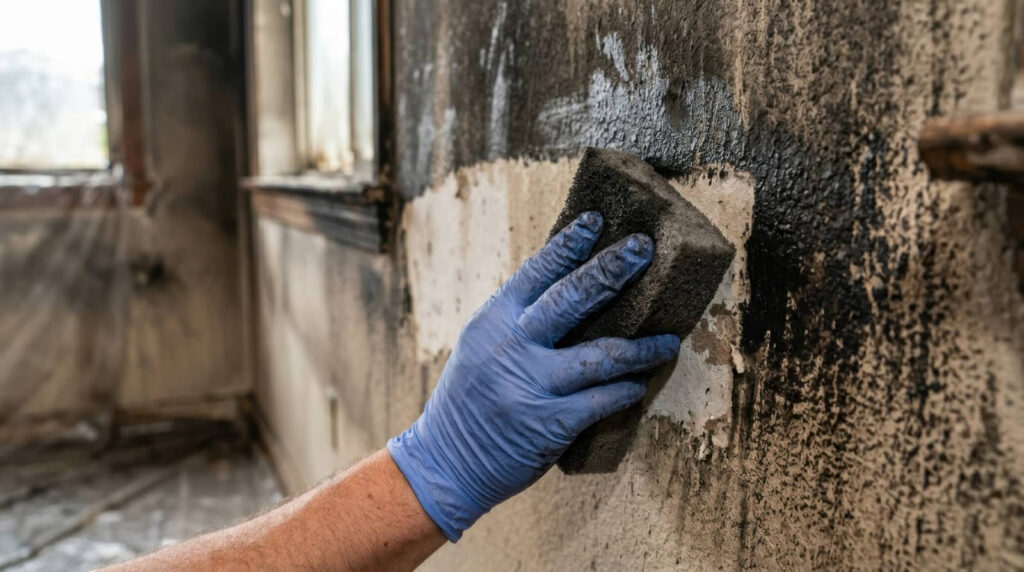
Effective soot damage cleanup starts with a careful assessment of the affected materials, since you can’t use the same method on drywall, fabric, electronics, and HVAC components.
You then isolate the area, wear proper PPE, and remove loose soot with HEPA vacuuming to prevent grinding particles deeper into porous surfaces.
Next, you apply dry-cleaning sponges or targeted detergents matched to the residue type, working from top to bottom so you don’t spread contamination.
You also clean hidden areas, including trim, vents, and contents, because soot migrates fast.
Afterward, you neutralize lingering odor, verify surface integrity, and document each step.
This controlled process helps you protect finishes, restore indoor air quality, and get your space back to a safe, familiar condition.
When to Call a Soot Cleanup Pro
Not every soot job is safe or practical to handle on your own. Call a soot cleanup pro when residue covers porous materials, HVAC components, or electronics, because improper wiping can embed particles and spread contamination.
You should also get expert help if smoke odor lingers, discoloration keeps returning, or you see acidic residue on metal, painted surfaces, or insulation. A trained team uses controlled methods that protect your home and help your space feel like yours again.
- Heavy soot on walls, ceilings, or contents
- Damage near vents, wiring, or appliances
- Stains, odors, or corrosion after initial cleaning
When you act early, you reduce secondary damage and join a safer, cleaner recovery process with people who know the work.
Recap
Like ashes after a phoenix, soot can seem harmless until it settles into every crease and fiber. You need more than ordinary cleaning because soot is oily, abrasive, and fast-spreading, so the wrong approach can lock it deeper into surfaces and finishes. Use HEPA vacuuming, targeted detergents, and controlled methods to remove residue safely. If the damage is widespread or hazardous, you shouldn’t wait—call a soot cleanup pro to protect your property and prevent lasting harm.
Recent Posts
Inside the Sewage Cleanup Process: Removal, Sanitation and Drying
Most sewage backups lead to hidden structural contamination beyond the visible spill. You’ll need to
Sewage Cleanup Cost: Factors That Can Affect Your Estimate
When wastewater intrusion interrupts your space, sewage cleanup cost can shift quickly depending on the
What to Do After a Sewage Backup Before Cleanup Begins
When a sewage backup rises like an unwelcome tide, sewage backup requires you to move