
Contents
When faced with water damage, your response must be methodical and precise. Start by evaluating the damage to understand the extent of the problem. Next, you’ll need to shut off the water supply to stop further issues. Removing standing water is essential, followed by drying and dehumidifying the area to prevent mold. Finally, restoring affected areas ensures a thorough recovery. Each step plays a critical role in mitigating damage effectively. What comes next could make all the difference.
Key Takeaways
- Assess the damage by checking for discoloration, warping, and mold, while documenting with photos and notes.
- Shut off the main water supply to prevent further flooding and document the issue for insurance claims.
- Remove standing water using a submersible pump or wet/dry vacuum, ensuring protective gear is worn.
- Dry and dehumidify affected areas with fans and dehumidifiers, monitoring humidity levels closely.
- Restore damaged areas through cleaning, moisture checks, and communication with restoration professionals.
Assessing the Damage
When you discover water damage, it’s vital to evaluate the situation promptly to prevent further issues. Start with an initial appraisal by identifying the source and extent of the damage. Check walls, floors, and ceilings for discoloration, warping, or mold growth. This step helps you determine how extensive the water intrusion is and which areas require immediate attention.
Next, perform damage documentation. Take clear photographs of all affected areas and write detailed notes regarding the condition of materials and any standing water. This documentation is important for insurance claims and future reference.
Make a list of damaged items, including furniture and appliances, to ensure nothing gets overlooked. By methodically evaluating and documenting the damage, you’re protecting your property and fostering a sense of community by sharing your experiences and knowledge with others facing similar challenges.
Shutting Off Water Supply
After evaluating the damage, the next step is to mitigate further issues by shutting off the water supply. Locate the main water valve in your home; it’s typically found near the water meter or where the water line enters your home. If you can’t find it, consult your home’s blueprint or ask a neighbor familiar with their setup.
Use these steps to shut off the water supply effectively:
| Step | Action | Notes |
|---|---|---|
| 1. Identify the valve | Locate the main water valve | Usually a round or lever type |
| 2. Turn off the valve | Rotate clockwise or flip lever | Make sure it’s fully closed |
| 3. Check for leaks | Inspect for remaining water flow | Use a sponge to absorb water |
| 4. Document the issue | Take photos of the damage | Useful for insurance claims |
| 5. Contact a plumber | If unsure, seek professional help | Rotate clockwise or flip the lever |
Confirming your emergency shutoff is functional will save you time and stress.
Removing Standing Water
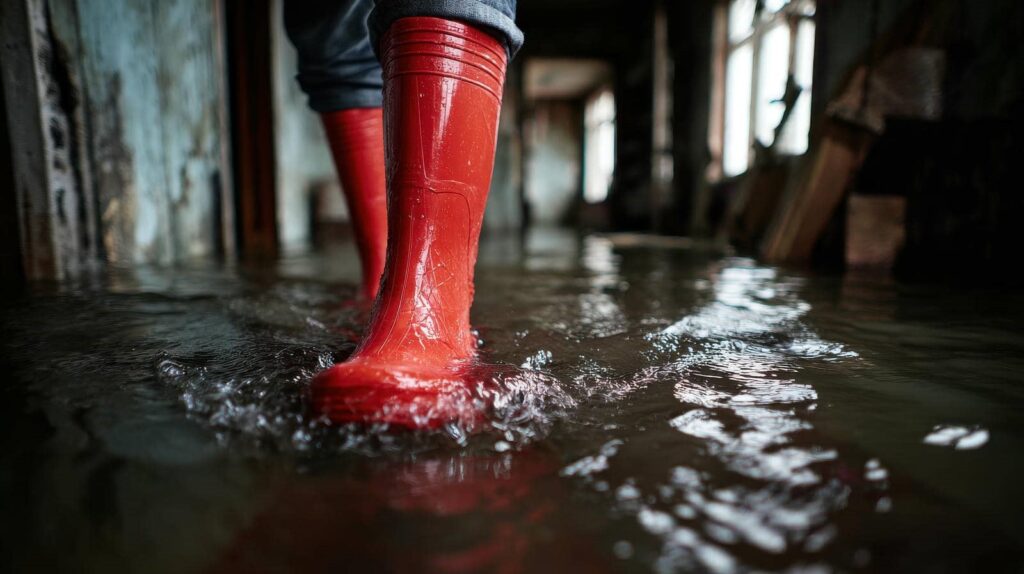
To effectively mitigate water damage, start by removing any standing water as quickly as possible. Use a submersible pump or wet/dry vacuum for efficient water extraction. Make certain you’re wearing protective gear, including gloves and boots, to safeguard against contaminants.
Begin pump operation in the deepest areas first, allowing gravity to aid in the extraction process. Work methodically, moving from one section to another, and be mindful of electrical hazards—always unplug devices in the affected area. If necessary, create channels to direct water towards your pump, making sure no pockets of water remain.
Once you’ve removed the bulk of the standing water, check for hidden areas—like under furniture or appliances—where moisture may linger. This step is essential, as any remaining water can lead to mold growth and further damage.
Your diligence in this phase sets the foundation for successful recovery.
Drying and Dehumidifying
Once standing water is removed, the next step focuses on drying and dehumidifying the affected areas. Effective moisture control is vital to prevent mold growth and structural damage.
Start by enhancing air circulation using fans and dehumidifiers to create a balanced environment.
- Position fans to direct airflow across wet surfaces.
- Use dehumidifiers to extract excess moisture from the air.
- Monitor humidity levels regularly with a hygrometer.
- Check hidden areas like crawl spaces and behind walls for dampness.
- Ensure ventilation in all rooms to maintain airflow.
Restoring Affected Areas
As you begin restoring affected areas, it’s vital to assess the extent of the damage thoroughly. Start by identifying materials that were impacted, such as drywall, flooring, or insulation. Understanding these materials helps you determine which items can be salvaged and which must be replaced.
Next, implement proper cleaning techniques tailored to the specific materials. For porous surfaces like carpets and upholstery, deep cleaning with specialized solutions is essential to eliminate mold and odors. Non-porous surfaces may require a simple detergent wipe-down followed by disinfection.
Don’t forget to check for hidden moisture behind walls or under floors; use moisture meters for accuracy.
As you work, document each step and maintain open communication with your team. This methodical approach ensures thorough restoration and fosters a sense of belonging, as everyone feels involved in the recovery process.
Frequently Asked Questions
How Can I Prevent Future Water Damage in My Home?
To prevent future water damage, implement waterproofing techniques around your foundation and install moisture sensors in vulnerable areas. Regularly inspect for leaks and maintain proper drainage to protect your home effectively and ensure safety.
What Insurance Coverage Do I Need for Water Damage?
You need extensive water damage insurance, including coverage types like dwelling, personal property, and liability. It’s crucial to review your policy details and ensure you’re adequately protected against potential water-related incidents in your home.
Can I Handle Water Damage Recovery Myself?
You can handle water damage recovery yourself, but it’s like steering through a stormy sea. Master water extraction and repair techniques to ensure your home’s safety, but don’t hesitate to seek professional help if needed.
How Long Does the Recovery Process Typically Take?
The recovery timeline typically spans from a few days to several weeks, depending on the damage assessment. Your proactive approach in addressing issues promptly can greatly influence the overall duration of the recovery process.
What Are the Signs of Mold Growth After Water Damage?
You might think mold’s just an artistic addition to your home, but it’s not! Look for musty odors, discoloration, or peeling surfaces. These are signs of mold growth, posing serious health risks if ignored.
Wrap-Up
Successful water damage recovery is like piecing together a complex puzzle; each step is essential for restoring your space. By evaluating the damage, shutting off the water supply, removing standing water, drying and dehumidifying, and finally restoring affected areas, you ensure thorough mitigation. Don’t overlook any phase, as each plays a significant role in preventing further issues, such as mold growth, and restoring your property to its original condition efficiently and effectively.
Recent Posts
Why Follow These Steps for Water Damage Restoration?
When facing water damage, it’s essential to follow a structured approach to restoration. Each step,
What Are Nearby Burst Pipe Repair Services?
When a burst pipe occurs, it’s essential to act quickly. Local emergency plumbers specialize in
Complete Strategies for Smoke Damage Restoration
Smoke damage restoration is like piecing together a puzzle; each step requires precision and care