
Contents
When fire or water damage strikes your commercial building, the immediate aftermath can feel overwhelming. It’s essential to understand the impact on your business and take swift, informed actions. From evaluating damage to creating an extensive restoration plan, each step plays an important role in your recovery. As you navigate this complex process, knowing how to select qualified restoration experts is critical for a successful outcome. Let’s explore the key considerations you need to keep in mind.
Key Takeaways
- Prioritize safety by evacuating personnel and assessing the situation before starting recovery efforts.
- Document all fire and water damage with photos and notes for insurance claims and assessment.
- Engage restoration experts with relevant certifications and proven experience to handle specialized repairs.
- Develop a detailed restoration plan outlining timelines, budgets, and roles to ensure effective recovery.
- Conduct thorough inspections for hidden issues like mold and structural damage before commencing repairs.
Understanding Fire and Water Damage Impact on Your Business
When a fire or water incident strikes your commercial building, understanding the extent of the damage is essential for effective recovery.
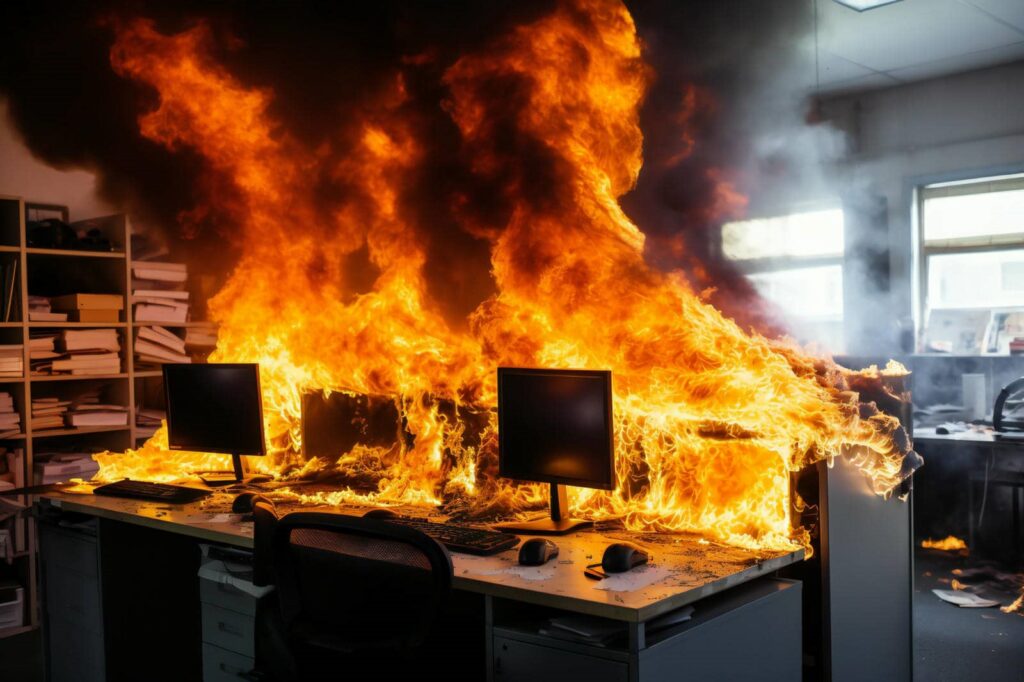
Fire damage can compromise structural integrity, create hazardous environments, and lead to extensive smoke odors. You’ll often find burnt materials, charred beams, and damaged electrical systems requiring immediate attention.
On the other hand, water damage can lead to mold growth, weakened walls, and ruined inventory, impacting your business operations. By evaluating both types of damage, you can prioritize repairs and restoration efforts.
Documenting the impact helps in claims processing and guarantees your business can return to normalcy more efficiently.
Immediate Steps to Take After Fire or Water Damage
After experiencing fire or water damage, your immediate actions can greatly influence the recovery process.
First, prioritize safety by following established safety protocols. Make certain everyone’s accounted for and evacuate if necessary.
Once it’s safe, call emergency response services to assess the situation. Document the damage with photos for insurance purposes, and avoid entering hazardous areas.
Next, contact your insurance company to report the incident and begin the claims process.
Start removing water or debris to prevent further damage, but wear protective gear.
Finally, keep communication open with your team, providing updates and support.
Taking these steps promptly can help you regain control and set a strong foundation for recovery.
How to Check for Damage After a Fire or Flood?
Once you’ve guaranteed safety and initiated the recovery process, it’s time to check for damage in your commercial building.
Start with a thorough damage assessment to identify affected areas. Use effective inspection techniques, such as visual inspections and moisture meters, to reveal hidden issues.
Look for charred materials, water stains, and mold growth, as these can indicate severe damage. Document everything meticulously, taking photos and notes to keep track of findings.
Involve professionals if needed; their expertise can uncover problems you might miss.
Create a Restoration Plan for Your Business
Creating a thorough restoration plan for your business is essential to guarantee a smooth recovery from fire or water damage.
This plan will help you stay organized and focused during a challenging time.
Here are three key components to include:
Restoration Timeline: Establish clear timeframes for each phase of the restoration process to keep everyone on track.
Budget Considerations: Outline your financial resources and potential costs to avoid surprises.
Communication Strategy: Develop a plan to keep stakeholders, employees, and clients informed throughout the restoration journey.
How to Select Qualified Restoration Experts for Fire and Water Damage
Selecting qualified restoration experts for fire and water damage is essential, especially when your business’s future is at stake.
Start by conducting certification verification to guarantee the experts possess relevant industry credentials. Look for certifications from reputable organizations like the Institute of Inspection, Cleaning and Restoration Certification (IICRC).
Next, focus on experience evaluation; inquire about their past projects and client testimonials to gauge their expertise. Don’t hesitate to ask for references, as these offer insight into their reliability and quality of work.
It’s also wise to check if they’ve insurance and bonding, guaranteeing protection against any unforeseen issues.
Understanding Fire and Water Damage Insurance Claims
Understanding fire and water damage insurance claims can be challenging, especially when you’re trying to navigate the intricacies of policy details and coverage limits.
Here are three key steps to simplify the claim process:
Review Your Insurance Policy: Familiarize yourself with the coverage specifics, including exclusions and limits.
Document the Damage: Take thorough photos and notes of the affected areas and items to support your claim.
Communicate with Your Insurer: Reach out to your insurance company promptly, providing all necessary information and documentation.
Preventing Future Fire and Water Damage in Your Business
While you can’t predict every disaster, proactive measures can markedly reduce the risk of fire and water damage in your business.
Start with fire safety by installing smoke detectors and fire extinguishers, and guarantee staff are trained in emergency procedures. Regularly inspect electrical systems and appliances to prevent potential hazards.
For effective water management, check for leaks and maintain your plumbing to avoid costly water damage. Invest in sump pumps and drainage systems to manage excess water, especially in flood-prone areas.
Create an emergency response plan that includes both fire and water damage scenarios.
Frequently Asked Questions
What Are the Long-Term Effects of Fire and Water Damage on Property Value?
Fire and water damage can considerably lower your property’s value due to depreciation and insurance implications. Buyers often perceive these damages as red flags, affecting marketability and potentially leading to decreased offers or prolonged selling times.
How Can I Ensure Employee Safety During the Restoration Process?
To guarantee employee safety during restoration, prioritize thorough employee training on safety protocols. Regularly review procedures, provide necessary protective gear, and foster open communication. Creating a safe environment shows you value their well-being and promotes teamwork.
Are There Government Grants Available for Businesses Restoring After Disasters?
Yes, you can find disaster relief grants for businesses restoring after calamities. By submitting a grant application, you’ll connect with resources that can support your efforts, helping you rebuild and strengthen your community ties.
What Should I Do With Damaged Inventory After a Fire or Flood?
First, conduct an inventory assessment to identify damaged items. Then, explore disposal options like recycling or donating salvageable goods. Document everything for insurance claims and consider professional help to navigate the process effectively.
How Can I Communicate With Customers During the Restoration Phase?
During restoration, keep your customers informed with effective updates. Share progress regularly, reassure them of your commitment, and address concerns directly. This builds trust, fosters belonging, and strengthens relationships even amidst challenges.
To Sum Up
Restoring your commercial building after fire or water damage is no small feat, but with the right approach, you can rise from the ashes and rebuild stronger than ever. By prioritizing safety, engaging professionals, and developing a solid restoration plan, you’re not just fixing a structure; you’re safeguarding your business’s future. Remember, every setback can be a setup for a comeback, so take these steps seriously and turn adversity into opportunity. Your business deserves it.
Recent Posts
Key Strategies for Business Recovery After Fire
Business Recovery After Fire begins with a structured plan that focuses on safety, damage assessment,
How to Create an Emergency Water Damage Plan
Emergency Water Damage can disrupt your business quickly, making a proactive response plan essential for
10 Best Business Continuity Strategies After Fire Damage
Imagine the charred remains of a once-thriving business, now reduced to ashes and uncertainty. After