
Contents
It’s a coincidence that many businesses underestimate the impact of fire damage until it happens to them. When faced with such a crisis, understanding the recovery steps is essential for restoring your operations and ensuring safety. From evaluating the damage to engaging professionals, each step plays an important role in the recovery process. You’ll need to navigate these complexities carefully to safeguard your business and its future. What comes next can greatly shape your recovery journey.
Key Takeaways
- Assess fire damage by engaging professionals to evaluate structural integrity and document visible and hidden issues for insurance claims.
- Gather clear photographs and detailed inventory records to support insurance claims and obtain repair estimates from qualified contractors.
- Hire fire damage restoration experts to manage cleanup, structural repairs, and smoke damage mitigation while allowing your business operations to continue.
- Conduct thorough water damage assessments, initiate immediate water extraction, and collaborate with professionals for effective rebuilding strategies.
- Implement fire prevention training for employees and maintain safety equipment, while fostering community support to enhance resilience during recovery.
Assessing the Extent of Fire Damage
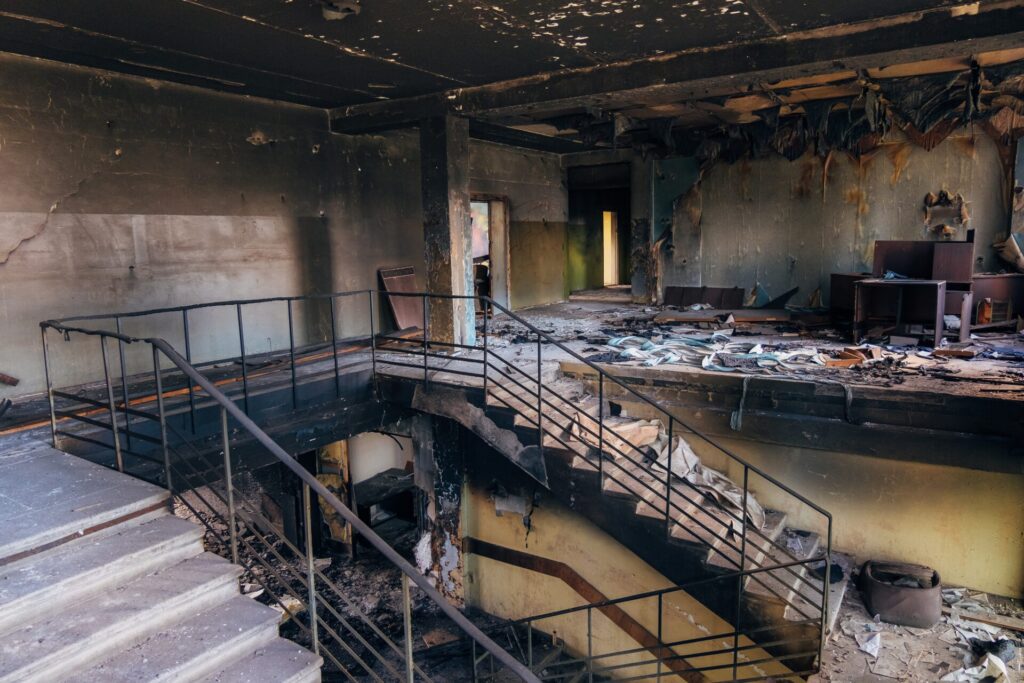
When you face the aftermath of a fire, evaluating the extent of the damage is essential for effective recovery. Start your damage assessment by understanding fire behavior; it helps you pinpoint affected areas.
Check for structural integrity, smoke damage, and water impact from firefighting efforts. Document everything thoroughly, as this information is important for insurance claims and restoration plans.
As you assess the damage, consider both visible and hidden issues. Look for charred materials, warped structures, and lingering odors that may indicate deeper problems.
Remember, this process isn’t just about numbers; it’s about your community and your business’s future. Engaging with professionals can provide insights, ensuring you don’t miss significant elements in your evaluation.
Ultimately, a thorough damage assessment not only facilitates recovery but also fosters a sense of belonging as you rebuild and restore hope for your business and community.
Ensuring Safety and Compliance
When recovering from fire damage, ensuring safety and compliance is essential for your peace of mind and the protection of your property.
You’ll need to assess the structural integrity of your building, handle any hazardous materials with care, and verify that you’re meeting local code requirements.
Taking these steps not only safeguards everyone involved but also helps you navigate the recovery process more effectively.
Assessing Structural Integrity
As you begin the recovery process after a fire, evaluating the structural integrity of your commercial building is essential for ensuring safety and compliance.
Start with extensive structural assessments to identify any damage that may compromise the safety of your space. Engage a qualified engineer or inspector to conduct thorough safety evaluations, focusing on load-bearing walls, beams, and foundations.
This professional insight is vital in determining if your building can safely be occupied or if repairs are necessary. Remember, addressing these concerns promptly not only protects your investment but also fosters a sense of security for your employees and clients.
Prioritizing safety during this phase helps you create a welcoming environment, important for rebuilding trust and community ties.
Hazardous Material Handling
In the aftermath of a fire, it’s essential to address hazardous materials that may pose risks to health and safety. You need to identify and manage hazardous waste, as it can linger long after the flames are extinguished.
Follow established safety protocols to guarantee the well-being of everyone involved in the recovery process. This may involve using protective gear, securing the area, and properly labeling any hazardous substances you encounter.
Engaging trained professionals can also help mitigate risks and guarantee compliance with safety standards. Remember, your safety and that of your team are paramount, and taking these precautions fosters a sense of community and support as you navigate this challenging recovery journey together.
Local Code Compliance
After addressing hazardous materials, the next significant step involves securing compliance with local codes and regulations. It’s essential to familiarize yourself with local regulations to confirm your recovery efforts align with compliance standards. This not only protects your property but also guarantees the safety of everyone involved.
| Key Considerations | Actions to Take |
|---|---|
| Permits Required | Check with local authorities |
| Safety Standards | Review OSHA guidelines |
| Building Codes | Consult local code books |
| Inspections Needed | Schedule routine checks |
Documenting Damage for Insurance Claims
After a fire, it’s essential to document the damage thoroughly for your insurance claim.
Start by gathering visual evidence, like photos and videos, to capture the extent of the destruction.
Additionally, keep a detailed inventory of lost items and obtain repair estimates to support your claim effectively.
Gather Visual Evidence
Capturing visual evidence is essential when documenting fire damage for insurance claims, as it can greatly influence the outcome of your recovery process. Start by taking clear photographs of the affected areas from various angles. This visual documentation helps guarantee that no details are overlooked during evidence collection. Additionally, don’t forget to include images of any damaged equipment or inventory.
| Evidence Type | Description |
|---|---|
| Photos of Damage | Clear images showing the extent of damage |
| Close-ups of Items | Detailed shots of specific damages |
| Surrounding Areas | Contextual images of the environment |
| Date-Stamped Evidence | Images with timestamps for accuracy |
Record Inventory Losses
Recording inventory losses is a critical step in the fire damage recovery process, as it directly impacts your insurance claim.
You’ll want to create a detailed record of all affected items, focusing on accurate loss documentation. Start by listing each item, along with its quantity and estimated inventory valuation before the fire. This not only helps substantiate your claim but also provides a clear picture of your losses.
Take photographs to further support your documentation, capturing both damaged and undamaged items for context. Remember, the more thorough your records, the stronger your case will be.
Document Repair Estimates
Once you’ve documented your inventory losses, the next step involves obtaining repair estimates for the damaged property.
It’s vital to gather accurate repair documentation from qualified contractors. Request detailed estimates that outline the scope of work, materials, and labor costs. This precision guarantees estimate accuracy, which is essential for your insurance claims.
As you collect these estimates, keep a record of all communications and any changes made. This thorough approach not only aids in your claim but also fosters trust with your insurance adjuster.
Engaging Professional Fire Damage Restoration Services
When faced with the aftermath of commercial fire damage, engaging professional fire damage restoration services is crucial to ensuring a thorough and efficient recovery. You’ll want to rely on fire damage experts who understand the complexities of restoration techniques.
These specialists possess the training and experience necessary to assess the full extent of damage and create a tailored recovery plan that meets your unique needs.
By bringing in these professionals, you’re not just investing in restoration; you’re also securing peace of mind. They’ll handle everything from smoke damage mitigation to structural repairs, allowing you to focus on what matters most—your business and team.
Choosing the right fire damage restoration service creates a sense of community, as you work together to restore not just your property but also the sense of normalcy for everyone involved.
This partnership is crucial in maneuvering the road to recovery efficiently and effectively.
Cleanup and Removal of Debris
As you begin the cleanup process after a commercial fire, addressing debris removal is essential for both safety and recovery.
Start by evaluating the area to identify hazardous materials, such as broken glass or charred structures. Prioritize your safety by wearing protective gear like gloves and masks.
Effective cleanup techniques include using shovels and brooms for larger debris, while vacuums can help with smaller particles.
Engaging a professional team can streamline this process, ensuring that debris removal is thorough and compliant with safety regulations.
Remember, you’re not alone in this; reaching out to local support networks can provide emotional assistance during this challenging time.
As you clear the space, you’re laying the groundwork for rebuilding, creating a sense of belonging and hope for the future.
Together with your community, you’ll rise from this setback stronger than before.
Addressing Water Damage From Firefighting Efforts
After clearing away the debris, attention must turn to the water damage caused by firefighting efforts. This step is vital in preventing further issues like mold growth or structural damage.
Start with a thorough moisture assessment to identify affected areas and the extent of the damage. You’ll want to make certain that every corner of your property is evaluated to avoid hidden moisture traps.
Once you’ve assessed the situation, initiate water extraction immediately. Using specialized equipment, you can effectively remove standing water and dampness. It’s imperative to act quickly time is of the essence when it comes to minimizing damage and costs.
Throughout this process, remember that you’re not alone. Many professionals specialize in water damage recovery and are ready to support you.
Restoring and Rebuilding Affected Areas
Once you’ve addressed water damage, the next crucial step is restoring and rebuilding the affected areas of your property. Employing effective fire restoration techniques is essential to guarantee a safe and welcoming environment. You’ll want to assess the damage thoroughly and develop rebuilding strategies that fit your needs. Collaborating with professionals can help you make informed decisions and restore a sense of belonging for your team and clients.
| Emotional Impact | Restoration Action | Outcome |
|---|---|---|
| Loss of comfort | Replace damaged drywall | Renewed space |
| Disruption of routine | Repair structural issues | Stability restored |
| Fear of recurrence | Upgrade fire safety | Increased confidence |
| Emotional distress | Revitalize decor | Welcoming atmosphere |
| Community support | Engage local services | Strengthened bonds |
Implementing Fire Prevention Strategies for the Future
To guarantee your property remains safe and resilient against future fire incidents, implementing effective fire prevention strategies is essential. Start by prioritizing fire safety training for your employees; knowledge is power when it comes to preventing disasters. Regular training sessions can empower your team to recognize potential hazards and respond appropriately.
Incorporate emergency drills into your routine to make certain everyone knows their roles during a fire emergency. Practicing these drills fosters a sense of unity and preparedness within your organization, making everyone feel more secure.
Additionally, assess your property’s fire safety measures, such as alarms, extinguishers, and exits. Regular inspections and maintenance are vital.
Frequently Asked Questions
How Long Does the Fire Damage Recovery Process Usually Take?
The fire recovery timeline can vary, but you should expect a few weeks to several months. A thorough damage assessment is essential to determine the extent of repairs needed and establish an accurate timeline for recovery.
Will My Business Operations Be Affected During Recovery?
Yes, your business operations will likely be affected during recovery. You’ll need to make operational adjustments to guarantee business continuity, but with careful planning and support, you can minimize disruptions and maintain client relationships.
What Are Common Hidden Hazards After a Fire?
After a fire, you might face hidden smoke residues and structural instability. These hazards can compromise safety and operations, so addressing them promptly is essential. Your well-being and the integrity of your space are top priorities.
Can I Handle Recovery Without Professional Help?
While DIY recovery might seem tempting, it’s often a double-edged sword. You’ll need a thorough risk assessment to guarantee safety. Professional help can guide you through complexities that you might overlook, fostering a safer recovery.
What Should I Do if My Insurance Claim Is Denied?
If your insurance claim’s denied, gather your claim documentation and file an insurance appeal. Be thorough, explain discrepancies, and consider seeking help from a professional who understands the process to bolster your chances of success.
Recap
In summary, steering through commercial fire damage recovery is essential for your business’s future. By evaluating damage, ensuring safety, and engaging professionals, you can avoid becoming part of that statistic. Prioritizing fire prevention strategies not only protects your investment but also fosters a resilient environment for your employees and clients. Take these steps seriously, and you’ll pave the way for a successful recovery and rebuilding process.
Recent Posts
What to Do After Water Damage: A Homeowner’s Action Plan
The fastest response after water damage is often the one that prevents the worst loss.
Sewage Cleanup: A Complete Guide to Safe Property Recovery
A sewage backup is both a visible mess and an invisible hazard, and you need
Sewage Backup Cleanup: How Professionals Restore Contaminated Areas
When you face a sewage backup, professionals first document the damage, stop the flow, and