
Contents
When a pipe bursts, you need to act fast: shut off the main water valve and cut power to the affected area before you do anything else. That first response limits flooding and reduces electrical risk. Then you can call a licensed plumber, document the damage, and start planning cleanup. What you do in the next few minutes can shape how much repair work follows.
Key Takeaways
- Shut off the main water valve immediately to stop more water from flooding your home.
- Turn off electricity to the affected area if water reaches outlets, appliances, or wiring.
- Call a licensed plumber right away to locate and repair the burst pipe safely.
- Take photos and notes of all visible damage before moving or cleaning anything.
- Remove standing water, then dry the area with fans and a dehumidifier to prevent mold.
Shut Off the Water Right Away
Move quickly to shut off the water as soon as you discover a burst pipe. You’ll limit water damage from burst pipe issues by stopping the flow at the main valve or the nearest supply shutoff.
Turn the handle clockwise until it stops, then confirm the leak slows or ends. If you live with family or roommates, tell everyone the water is off so they don’t keep using fixtures.
If the valve is stuck, don’t force it; call a plumber or your water utility for help. Once the flow stops, stay focused and move to the next response step.
Acting fast protects your home, reduces cleanup, and helps your household feel in control during a stressful moment.
Cut Power to the Area
Turn off electricity to the affected area if water has reached outlets, appliances, or wiring.
Don’t step into standing water near any powered equipment, and treat the area as electrically hazardous until it’s safe.
If you’re unsure whether the circuit is compromised, call an electrician right away.
Turn Off Electricity
If water has reached outlets, appliances, or wiring, you need to cut power to the affected area right away. Go to your electrical panel and switch off the breaker for that room or zone.
If you can’t identify the correct breaker, shut off the main breaker, but only if you can do it without standing in water or touching wet surfaces.
Use a flashlight instead of overhead lights or plugged-in lamps. Don’t plug in fans, vacuums, or other equipment near damp areas until an electrician says it’s safe.
After power is off, keep everyone clear of the room and mark the breaker so nobody turns it back on by mistake.
When you’re safe, call a licensed electrician to inspect the system before restoring electricity.
Avoid Standing Water
Once you’ve cut power to the affected area, keep out of any standing water until it’s removed. Water can hide slick debris, weaken flooring, and carry contamination from drains, insulation, or building materials.
Put on rubber-soled shoes only if the surface is dry enough to cross safely, and avoid wading through puddles to “check” the space. Instead, stay on dry ground, mark the hazard, and guide others away.
If water is spreading, use towels or a mop from a dry position to slow it, but don’t push water toward outlets, cords, or appliances. Your goal is to keep the area stable, reduce slip risk, and limit damage until cleanup starts.
Working carefully protects you and helps your home recover faster together.
Call An Electrician
Because water and electricity are a dangerous mix, cut power to the affected area at the breaker if you can reach it safely, and call an electrician right away if you’re unsure which circuits are wet or compromised.
Don’t step into pooled water to check outlets, cords, or appliances. If you smell burning, hear buzzing, or see sparks, leave the space and keep others out until a licensed pro says it’s safe.
Even if the lights still work, moisture can travel inside walls and damage wiring you can’t see. An electrician can test circuits, verify grounding, and confirm when power can return.
Acting fast protects your home, your crew, and everyone who belongs there, so you can move to cleanup with confidence.
Call a Plumber for the Burst Pipe
Call a licensed plumber as soon as you’ve shut off the water supply, since a burst pipe can keep leaking or cause hidden damage even after the visible flooding slows.
You need a pro who can locate the break, isolate the line, and repair it safely without worsening the loss. If the pipe froze, split, or corroded, your plumber can check nearby joints and fittings for stress, too.
They’ll also confirm whether the main line, fixture branch, or appliance connection failed, which helps you prevent a repeat.
Keep the area clear so they can work fast, and tell them where you heard water, saw staining, or noticed low pressure. Acting quickly helps protect your home and gives you a team member you can trust.
Take Photos for Your Insurance Claim
Take clear photos of all visible water damage before you move or clean anything.
Capture wide shots of each affected room, then take close-ups of damaged walls, flooring, furniture, and the burst pipe area.
These images give your insurer a precise record of the loss and support your claim.
Document Visible Damage
Start documenting the damage as soon as it’s safe to enter the affected area, because photos and video can support your insurance claim and help verify the extent of the loss.
Use your phone or camera to record damaged flooring, walls, baseboards, furniture, and belongings before you move anything. Focus on stains, swelling, bubbling paint, sagging materials, and standing water around the leak path.
Keep each image sharp and date-stamped if possible. Note the room, time, and what you observed in a simple log.
If you’ve got a family member or neighbor nearby, ask them to witness the condition too. Save everything in one folder and back it up to cloud storage.
Clear records help you speak confidently with adjusters and restoration professionals.
Capture Wide Shots
After you’ve documented close-up damage, step back and capture wide shots of each affected room so the full scope is clear for your insurance claim.
Stand in each doorway, then take photos from opposite corners to show walls, floors, ceilings, and affected belongings in one frame. Keep the camera level and include recognizable landmarks, like vents, windows, and furniture, so adjusters can orient themselves quickly.
Take both horizontal and vertical shots, and avoid zooming unless you need to preserve detail. If water has spread into hallways or adjacent rooms, photograph those areas too.
Save every image with timestamps if your phone allows it. These wide shots help prove the water’s reach, support your claim, and show you handled the loss carefully.
Move Furniture and Belongings
Quickly move furniture, rugs, boxes, and other belongings away from the affected area to limit further damage.
Prioritize items that can absorb water or trap moisture, because they’ll worsen staining and swelling if left in place.
Lift pieces instead of dragging them so you don’t scratch floors or spread contaminants. If an item is too heavy, ask someone to help and use safe lifting techniques.
Place dry items in a clean, protected room with enough airflow to avoid secondary damage.
Keep electronics, documents, and soft goods separated so you can inspect them later.
Group belongings by condition, and note what touched water for your records.
Acting fast helps you protect what matters and keeps your home’s recovery organized, calm, and under control.
Remove Water Safely
Before you remove standing water, shut off power to the affected area at the breaker panel to reduce the risk of shock.
Once the area is de-energized, use wet vacuums to extract water from floors, carpets, and low spots.
Work methodically and stop if you can’t confirm the area is electrically safe.
Shut Off Power
If water from a burst pipe has reached outlets, appliances, or the breaker panel, shut off the power at the main breaker if you can do it safely.
Never stand in water while touching electrical controls. If the panel is wet, damaged, or hard to reach, back away and call an electrician or emergency services.
After you de-energize the area, keep everyone out until a qualified professional confirms it’s safe.
Unplug nearby devices only if your hands and floors are dry. Don’t use fans, lights, or extension cords in the affected room until power is restored and inspected.
You’re protecting your home and your crew by treating every wet surface as live.
Clear communication now helps everyone stay safe and move into cleanup with confidence.
Use Wet Vacuums
Use a wet vacuum to remove standing water from floors, carpets, and low areas as soon as the space is safe to enter.
Work in short passes and empty the tank often so suction stays strong. Use the correct attachment for each surface: a hard-floor nozzle for tile and vinyl, and a carpet tool for pile.
Move slowly to pull water from seams and edges, where moisture hides. If the water is deep, start at the perimeter and work toward the center.
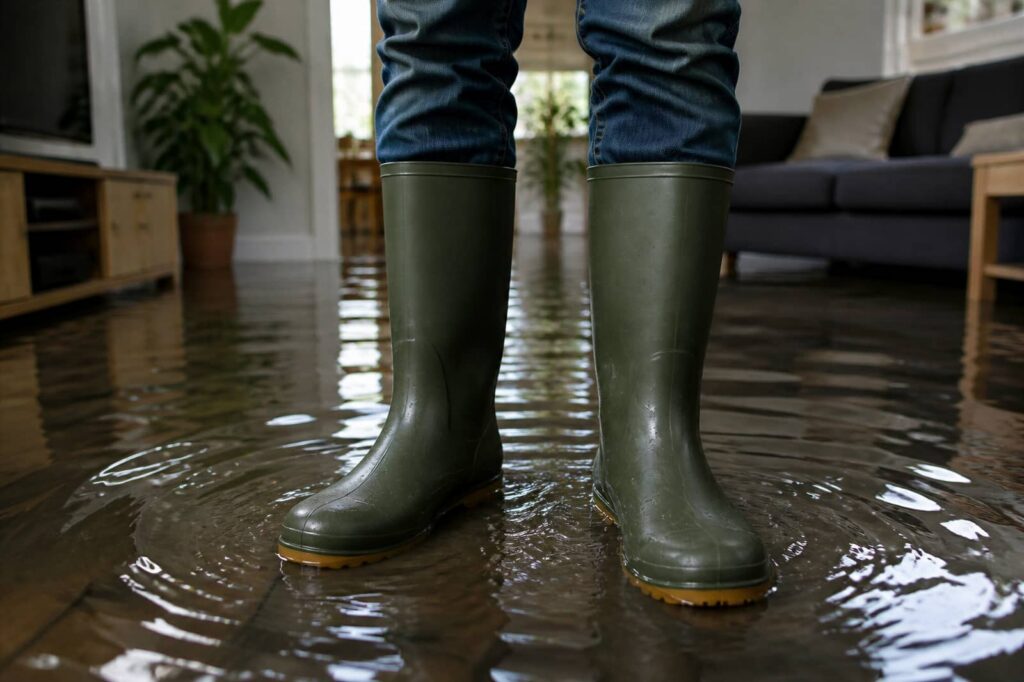
Wear rubber boots and gloves, and keep cords away from puddles. Don’t use a standard household vacuum.
As you remove water, check for swelling, soft spots, and damp padding. Acting fast helps you protect your space and move the cleanup forward.
Dry Water-Damaged Walls and Floors
Once you’ve removed standing water, dry the walls and floors right away to stop moisture from soaking deeper into framing, drywall, and subflooring.
Run fans across the affected area and place a dehumidifier nearby to pull moisture from the air. Open windows only if outdoor air is drier than indoor air.
Lift rugs, baseboards, and furniture pads so air can circulate underneath. If drywall feels damp above the visible line, mark the edge and keep drying beyond it.
Wipe hard surfaces with clean towels, then rotate them often so you’re not spreading water back. Check flooring seams, corners, and wall bottoms for lingering dampness.
Keep the area clear so your household can work together efficiently and you can track progress without missing hidden wet spots.
Watch for Mold Growth
Even after the visible water is gone, you still need to watch for mold growth because damp drywall, insulation, and subfloors can support it within 24 to 48 hours.
Check closets, baseboards, under sinks, and any area that stayed cool or smelled musty. Look for dark spotting, fuzzy patches, peeling paint, and persistent damp odors.
Keep your fans and dehumidifier running until materials read dry, and keep indoor humidity below 60%.
If you’ve already cleaned the area, don’t assume you’re clear; mold can start in hidden spaces you can’t see.
If you notice spreading discoloration or smell mildew, call a restoration professional quickly. Acting fast helps protect your home, your indoor air, and everyone living there.
Decide What to Save or Toss
Now decide which items you can save and which ones need to go. Start with hard surfaces, sealed containers, and items that dried fast; these often recover well after cleaning and disinfection.
Set aside paperwork, photos, and electronics only if they stayed dry or received minimal exposure. Toss porous materials that soaked up dirty water, like drywall, insulation, carpet padding, and upholstered items, because they trap contaminants and can’t dry safely.
If an item smells musty, feels warped, or shows staining, treat it as compromised. Sort everything into keep, clean, and discard piles so your team can work efficiently and stay organized.
Wear gloves and masks while handling damaged belongings, and don’t mix salvageable items with trash. Quick, careful decisions protect your home and help you regain control.
Hire a Water Damage Restoration Company
When the cleanup is beyond what you can safely handle, hire a water damage restoration company to assess the loss and start controlled drying.
You’ll get trained technicians who use moisture meters, thermal imaging, and industrial extractors to find hidden water fast. They’ll document damage for your insurance claim, set containment, and reduce the chance of mold, warped flooring, and electrical hazards.
Ask for 24/7 response, IICRC-certified crews, and a clear drying plan with daily updates. You should also confirm they’ll remove unsalvageable materials and sanitize affected surfaces.
Acting quickly helps you protect your home and stay connected to a team that knows how to restore it right. Their experience gives you support, structure, and peace of mind.
Wrap-Up
When water damage from a burst pipe strikes, you need to act fast. Shut off the water, cut power to the area, and call a licensed plumber right away. Take photos for your insurance claim, then move furniture and start drying the space to reduce mold risk. Don’t let the problem snowball. If damage is extensive, hire a restoration company to finish the job and help you decide what’s worth saving.
Recent Posts
How to Clean Smoke Damage Without Making the Problem Worse
Before you clean smoke damage, you need to identify the residue type, because dry soot,
What to Do After a House Fire: Your First Steps Toward Recovery
When smoke clears, the path ahead can feel like a locked door, but your first
Fire Damage Restoration Cost: What Impacts the Final Price?
Just as you notice the first smoke stain, a repair estimate can change fast. You’ll