
Contents
When disaster strikes, like a sudden flood, the impact on your business can be devastating. It’s vital to act swiftly and methodically to minimize damage and guarantee safety. Start by evaluating the situation and documenting any losses. But what steps should you take next, and what equipment will you need to efficiently extract water? Understanding these key elements can make all the difference in your flood water extraction recovery process.
Key Takeaways
- Ensure employee safety first, verifying all are accounted for before entering the flooded premises.
- Use appropriate equipment like pumps, extractors, and dehumidifiers for efficient water removal and drying.
- Document all damages thoroughly with photos for insurance claims and reports.
- Contact professional water extraction services for effective removal and sanitization, preventing mold growth.
- Implement preventive measures, such as improving drainage systems and understanding flood insurance policies, for future flood risks.
Understanding the Impact of Flood Water on Businesses
When flood water invades your business, it’s essential to understand the profound effects it can have on operations, finances, and employee safety. The flood consequences aren’t just immediate; they can ripple through your entire organization.
Water damage can disrupt daily operations, leading to lost productivity and potential income. Additionally, crucial equipment and inventory may suffer irreparable harm, which can create significant financial strain during a period when you’re already vulnerable.
Employee safety becomes a pressing concern, as flood conditions can pose health risks and even lead to injuries. Prioritizing safety not only protects your team but also fosters a sense of community within your business.
Understanding these impacts is crucial for effective business recovery. A well-informed approach can help you mitigate risks and prepare for future incidents, ensuring that your business emerges resilient and ready to thrive.
Immediate Steps to Take After a Flood
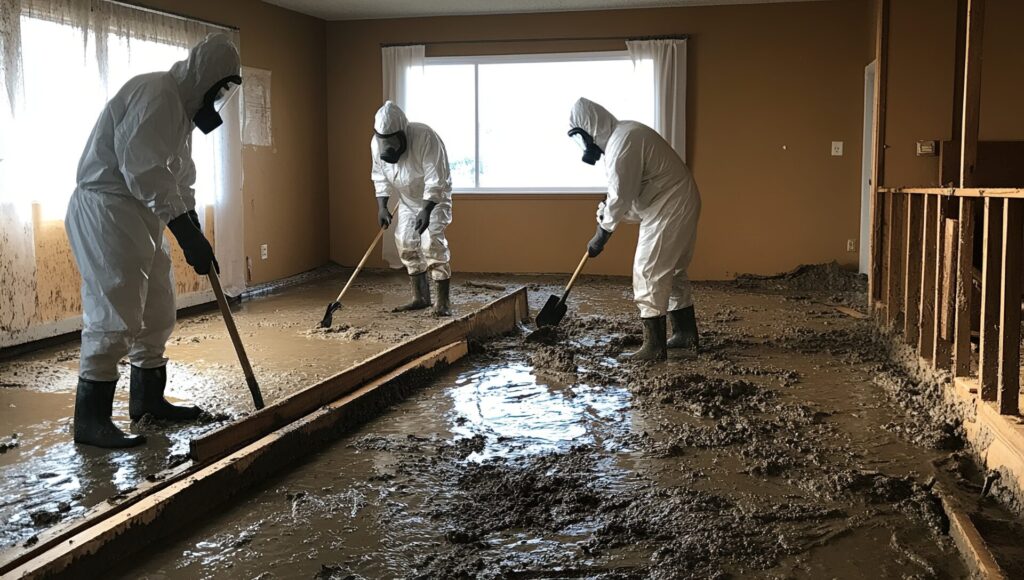
As soon as floodwaters recede, it’s crucial to act swiftly to minimize damage and guarantee safety. Start by following your flood response protocol. Verify all employees are safe and accounted for before entering the premises.
Wear protective gear to avoid hazards like contaminated water and sharp debris.
Next, assess the damage and document it thoroughly with photos for insurance purposes. Contact your insurance provider immediately to report the incident and begin the claims process.
Once safety is confirmed, initiate water extraction efforts to prevent further damage and mold growth. If possible, remove any valuable equipment or documents to a dry location.
You’ll also want to communicate with your team about the steps being taken to maintain business continuity. Keeping everyone informed fosters a sense of belonging and teamwork during this challenging time.
Essential Equipment for Water Extraction
To effectively extract water after a flood, you’ll need the right equipment.
Pumps and extractors are essential for removing standing water quickly, while drying equipment helps prevent further damage.
Understanding how to use these tools will guarantee a more efficient recovery process.
Pumps and Extractors
Effective water extraction relies heavily on the right pumps and extractors, which are essential for removing standing water swiftly and efficiently.
Submersible pumps are a must-have for tackling deep water, as they can operate underwater to draw out significant volumes quickly.
When you’re dealing with larger areas, industrial extractors come into play, offering powerful suction to remove water from carpets, upholstery, and hard surfaces.
These machines are designed for heavy-duty use, ensuring they withstand the rigors of emergency situations.
Always assess your specific needs and choose equipment that aligns with your business’s capacity and the water volume you’re facing.
Investing in quality pumps and extractors not only streamlines the extraction process but also helps protect your business assets effectively.
Drying Equipment Essentials
When it comes to drying out a flooded space, having the right drying equipment is crucial for preventing further damage and mold growth.
Start with dehumidifier types; consider both refrigerant and desiccant models based on your specific needs. Refrigerant dehumidifiers are effective in warmer environments, while desiccant units excel in cooler conditions.
Next, don’t underestimate the importance of moisture meters. These handy devices help you measure moisture levels accurately, guiding your drying process effectively. By regularly checking moisture content, you can guarantee your space returns to a safe and dry state.
Professional Water Extraction Services
Flooding can cause significant damage to your property, and professional water extraction services are essential for minimizing that impact. When you need immediate flood response, engaging experts can make all the difference in efficient water recovery. They bring specialized equipment and knowledge to handle the situation effectively.
Here’s a quick comparison of different professional water extraction services:
| Service Type | Key Features | Ideal For |
|---|---|---|
| Emergency Response | 24/7 availability | Immediate flood situations |
| Industrial Extraction | Heavy-duty equipment | Large commercial properties |
| Residential Services | Personalized care | Homes and small businesses |
| Mold Remediation | Prevents future growth | Post-flood recovery |
| Insurance Assistance | Claims support | maneuvering insurance processes |
Safety Precautions During Water Extraction
Although water extraction is essential for protecting your property, safety must always come first. Before you begin, verify you have the appropriate safety gear, such as waterproof boots, gloves, and masks. This gear protects you from contaminants that may be present in floodwater.
Familiarize yourself with emergency procedures, including evacuation routes and communication plans, so you’re prepared for any unexpected situations.
When working in affected areas, be cautious of electrical hazards. Disconnect power sources and use battery-operated equipment when possible.
Always assess the structural integrity of your building, as weakened structures can pose significant risks. If you encounter any unsafe conditions or are unsure about the extraction process, don’t hesitate to call professionals.
The Water Damage Restoration Process
Once you’ve guaranteed safety, the water damage restoration process begins with an initial assessment of the affected areas.
You’ll then employ specific extraction techniques to remove standing water effectively.
Finally, you’ll focus on drying and restoration methods to restore your space to its original condition.
Initial Assessment Steps
How can you effectively assess water damage after an emergency? Start with an initial assessment to identify the extent of the damage. This step is essential for informed decision-making. Use a systematic approach to evaluate affected areas, making notes of visible signs like discoloration or warping.
Here’s a helpful table to guide your damage evaluation:
| Area Affected | Damage Observed | Next Steps |
|---|---|---|
| Office | Water stains | Document and dry |
| Warehouse | Mold growth | Contain and remediate |
| Storage Room | Structural damage | Consult a pro |
| Restrooms | Flooding | Begin extraction |
Extraction Techniques Overview
After evaluating the water damage, the next step in the restoration process is effective extraction. You’ll want to employ various extraction methods to guarantee thorough water removal.
Start with powerful pumps to remove large volumes of water quickly, especially in severe cases. For residual moisture, use wet/dry vacuums, which are effective in tight spaces.
Don’t forget about specialized tools like extractor wands for carpets and upholstery, as they help lift water that’s been absorbed.
Drying and Restoration Methods
Effective drying and restoration are essential in minimizing long-term damage following a flood. Start by evaluating the affected areas using moisture mapping to identify hidden moisture pockets. This helps you target your drying efforts efficiently.
Next, employ dehumidification techniques to reduce humidity levels, preventing mold growth and structural damage. Use industrial dehumidifiers and fans strategically to create airflow, enhancing evaporation.
Monitor the process regularly, ensuring all materials, including carpets and drywall, dry completely. Consider thermal imaging tools for extensive moisture detection.
Finally, once everything’s dried, sanitize the space to eliminate any contaminants. By following these methods, you’ll not only restore your business but also foster a safe environment for your employees and customers.
Preventive Measures for Future Flooding
While flooding can seem unpredictable, taking proactive steps can considerably reduce your risk of future incidents. Start with a thorough flood risk assessment to identify vulnerable areas in your business. This assessment will help you recognize potential hazards and prioritize improvements.
Next, consider investing in drainage system improvements. Confirm that your gutters, downspouts, and drainage channels are functioning efficiently to divert water away from your property. Regular maintenance is essential—clean out debris and check for blockages.
You might also explore installing sump pumps or flood barriers to provide additional protection.
Collaborate with local authorities to understand flood zones and participate in community-wide efforts to mitigate flood risks.
Insurance Considerations for Flood Damage
How prepared are you when it comes to insurance coverage for flood damage? Understanding flood insurance and your policy coverage is essential for safeguarding your business.
Many business owners overlook the importance of thorough flood insurance, which can lead to devastating financial consequences.
Consider these key aspects:
- Policy limits: Verify your coverage reflects the potential loss.
- Exclusions: Know what’s not covered to avoid surprises.
- Deductibles: Factor in how much you’ll need to pay out-of-pocket.
- Claims process: Familiarize yourself with how to file a claim effectively.
- Local regulations: Stay informed about state-specific requirements for flood insurance.
Frequently Asked Questions
How Can I Assess the Extent of Flood Damage to My Business?
To assess flood damage, start by documenting visible damage, checking equipment, and evaluating structural integrity. Review your business insurance policy to identify coverage, and consider hiring professionals for a thorough flood damage assessment.
What Are the Common Health Risks Associated With Flood Water Exposure?
You’d think floodwater’s just water, but it’s often contaminated with harmful bacteria and chemicals. You should take health precautions seriously to avoid infections, respiratory issues, and other ailments that can arise from exposure.
How Long Does Water Extraction Typically Take for Businesses?
Water extraction duration varies, typically taking a few hours to several days, depending on the flood’s severity. Efficient extraction accelerates your business recovery timeline, minimizing downtime and helping you return to normal operations swiftly.
Can I Use My Regular Vacuum for Water Extraction?
You can’t use your regular vacuum for water extraction due to its limitations. Proper water extraction tools are necessary to handle large amounts of water effectively, ensuring better results and protecting your equipment from damage.
What Types of Businesses Are Most Vulnerable to Flooding?
Retail establishments and manufacturing facilities stand out as the most vulnerable to flooding. Their reliance on physical inventory and equipment creates significant risk, so you should prioritize flood preparedness to safeguard your assets and operations.
Review
In the aftermath of a flood, the path to recovery can feel overwhelming, but taking decisive action can turn chaos into clarity. Picture your business rising resiliently from the depths, with water receding like a receding tide, revealing a space ready for renewal. By following the steps outlined in this guide, you’re not just extracting water; you’re safeguarding your future. Remember, with every drop removed, you’re one step closer to restoring your business’s heartbeat and ensuring it thrives again.
Recent Posts
Top Techniques for Commercial Flood Water Removal
When dealing with commercial flood water removal, effectiveness hinges on the right techniques and equipment.
Mastering Commercial Flood Water Extraction Methods
In the world of disaster recovery, mastering flood water extraction is akin to maneuvering a
10 Tips for Water Damage Restoration Process
Imagine a small leak in your roof that, if left unchecked, turns into a waterfall